


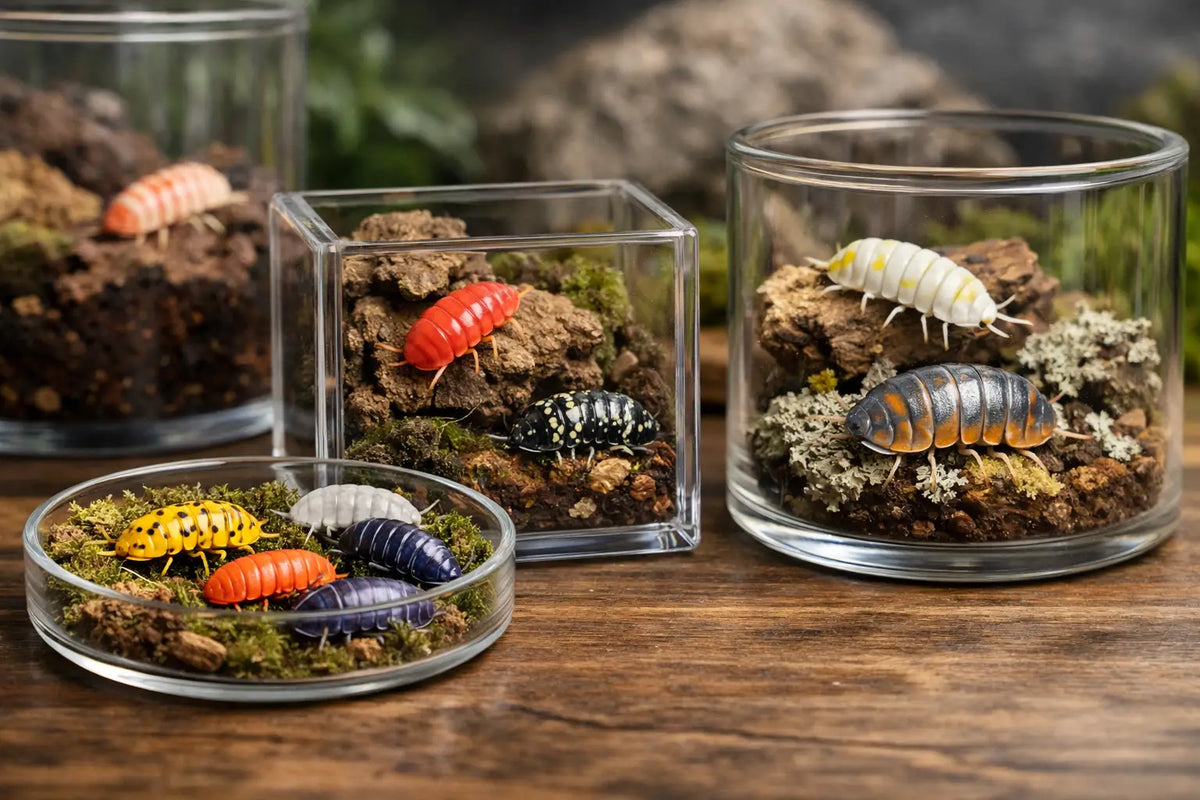
If your isopods spend more time hiding than showing off, they are probably not scratching that collector itch. The best display isopods for collectors are the ones that make you stop mid-scroll, lean toward the enclosure, and text a blurry phone photo to a hobby friend with way too many exclamation points.
Display species are not always the easiest, the cheapest, or the fastest to reproduce. That is part of the appeal. In this corner of the hobby, color, contrast, behavior, rarity, and plain old charisma matter. These are not just cleanup crew pods. These are the addictive pokemon of the invert world.
What makes the best display isopods for collectors?
A true display isopod needs more than a cool name. It should have strong visual identity at a glance, whether that means bright yellow faces, dramatic white skirts, glossy armor, or a pattern that looks almost fake under good lighting.
Behavior matters too. Some species are stunning but secretive, so they become more of a treasure hunt than a constant display animal. Others are bold feeders that pile onto leaf litter and cork bark right when you want to show someone your colony. Neither type is wrong, but they deliver different collector experiences.
Then there is the part hobbyists rarely say out loud - exclusivity is fun. A species can be objectively harder to keep or slower to build, yet still earn a spot in a collection because it feels special. That feeling is real, and for collectors, it counts.
1. Rubber Ducky isopods
There is a reason these became hobby royalty. Rubber Duckies have that instantly recognizable yellow face and rounded body shape that makes them look almost cartoon-designed. Even people who do not keep isopods understand the appeal the second they see one.
As display animals, they hit the sweet spot between rarity, visual charm, and collector status. They are not the species you buy because you need your enclosure cleaned. You buy them because they are Rubber Duckies and your brain says yes.
The trade-off is that they are not a beginner impulse purchase. They need stable conditions, patience, and a keeper who does not panic-adjust the setup every three days. For collectors willing to respect their pace, they are still one of the strongest display picks in the hobby.
2. Cubaris murina Glacier
Glacier has a clean, frosty look that photographs beautifully and stands out against dark substrate. The appeal here is less cartoon mascot and more polished collector aesthetic. They look expensive even when they are just standing still.
Compared with some higher-maintenance Cubaris, Glacier can be a more approachable way to get that premium display vibe. They are still best appreciated by keepers who understand moisture gradients and ventilation balance, but they tend to be less intimidating than the most delicate collector species.
If your taste runs toward crisp color and modern-looking colonies, Glacier is a very strong contender.
3. Cubaris Panda King
Panda Kings are one of those species that stay popular because they earned it. The black-and-white contrast is sharp, the patterning is obvious even to casual observers, and the name alone has collector gravity. They feel iconic without being overhyped for no reason.
They also have an advantage in the display category because the pattern reads clearly in a planted or naturalistic setup. Some isopods are gorgeous in macro photos but disappear in the bin. Panda Kings still look like Panda Kings from normal viewing distance.
For many collectors, they are the gateway into premium display species. Not entry-level in the broadest sense, but very reasonable for hobbyists who already have a few colonies and want something that feels like a real upgrade.
4. Cubaris White Shark
White Shark is for collectors who like dramatic texture as much as color. These pods have a sculpted, armored look that makes them feel prehistoric and expensive at the same time. They bring a more serious, high-end visual compared with cuter species.
This is also where it depends on your style as a collector. If you want bright novelty, a Ducky or Panda King might win. If you want a species that looks like a tiny relic from another era, White Shark has that energy.
They are better suited to keepers who already know what they are doing. Not impossible, just less forgiving if you treat them casually.
5. Merulanella Ember Bee
If your collection needs a showpiece, Ember Bees absolutely belong in the conversation. Their bold orange and dark banding gives them serious pop, and few species look this electric when settled in and healthy.
They are also one of the clearest examples of why display value and ease do not always overlap. Merulanella species can be touchier, and that means they are often more rewarding for advanced keepers than for hobbyists still figuring out the basics.
Still, from a pure collector standpoint, Ember Bees feel like a flex in the best possible way. When people talk about dream pods, these are often on the list.
6. Porcellio werneri
Porcellio werneri brings a totally different kind of display appeal. Instead of bold patterning, you get a dramatic shape and a dry, desert-style aesthetic that stands apart from the more common tropical collector look. They are elongated, elegant, and a little weird, which is exactly why many keepers love them.
They work especially well for collectors who want variety in body form, not just another round Cubaris with a different paint job. A display collection gets more interesting when species do not all read the same from across the room.
Their care also differs from moisture-heavy species, so they reward keepers who can adapt husbandry instead of treating every bin alike.
7. Porcellio expansus
Expansus has size on its side. A large, impressive isopod with a commanding presence can be just as collectible as a rare pattern morph, and this species proves it. They look substantial, almost oversized compared with what non-hobbyists expect an isopod to be.
This makes them excellent for live viewing. You do not need perfect macro vision to appreciate them. Their physical presence alone gives them display value, especially in well-designed enclosures with open bark flats and strong contrast.
The trade-off is space and husbandry expectations. Bigger Porcellio often need setups built around their needs, not a generic one-size-fits-all container.
8. Cubaris Lemon Blue
Lemon Blue has one of those color combinations that sounds unreal until you see it. The contrast feels collectible immediately, and that unusual palette helps it stand out in a crowded premium market.
For collectors chasing unusual tones rather than the most famous names, this species has strong appeal. It feels a little less expected, which can be part of the fun. Not every great display colony needs to be the one everyone already knows.
Like many premium Cubaris, they reward stability and patience. They are not the species for constant fiddling, but in a settled setup, they can be absurdly satisfying to keep.
9. Cubaris Red Edge
Red Edge is a strong choice for collectors who appreciate subtle drama. The appeal is not loud in the same way as Duckies or Ember Bees. Instead, you get a refined look with a distinct edge coloration that catches the eye when the colony is active.
This is often how collections mature. At first, many hobbyists want the flashiest thing possible. Later, they start appreciating species with more nuanced beauty. Red Edge fits that second phase perfectly.
That does not make them boring. It makes them the kind of species that grows on you fast, then somehow becomes one of the bins you check first.
10. Shiro Utsuri isopods
Shiro Utsuri is a collector favorite for good reason. The black-and-white pattern has a polished, almost designer look, and the visual contrast gives them excellent display presence in natural setups.
They also hit a nice middle ground between novelty and sophistication. Cute enough to impress newer hobbyists, striking enough to satisfy experienced collectors. If you want a colony that feels premium without leaning too heavily on mascot appeal, these are a smart pick.
How to choose the right display species for your collection
The best display isopods for collectors are not automatically the rarest ones. The right choice depends on what kind of satisfaction you want from the hobby.
If you love iconic status and instant recognition, start with species like Rubber Ducky or Panda King. If you prefer unusual shape, size, or texture, look harder at Porcellio werneri, Porcellio expansus, or White Shark. If color is the whole game, Ember Bee and Lemon Blue bring serious visual payoff.
You should also be honest about your husbandry style. Some collectors are patient, stable, and methodical. Others like fast results and active colonies. There is no shame in knowing which type you are. A species that matches your habits will usually feel more rewarding than a rarer species that constantly stresses you out.
And yes, budget matters. A smaller starter group of a dream species can be more fun than buying three cheaper colonies you are only half excited about. Collector joy counts. That is the whole point.
A display colony should still be a healthy colony
It is easy to get caught up in names, line hype, and how good a species looks under ring light photos. But a display animal only becomes truly impressive when it is thriving. Color looks better, behavior becomes bolder, and the whole colony starts giving you those moments that make the hobby feel worth every bit of effort.
That is why experienced keepers tend to shop curated sources and stick with sellers who understand collector expectations. When you are building a shelf of dream pods instead of just stocking a cleanup crew, quality matters more. BCO Mushi lives in that part of the hobby on purpose.
Pick species that make you want to check the enclosure one more time before bed. That is usually how you know you found a keeper worth collecting.
0 comments